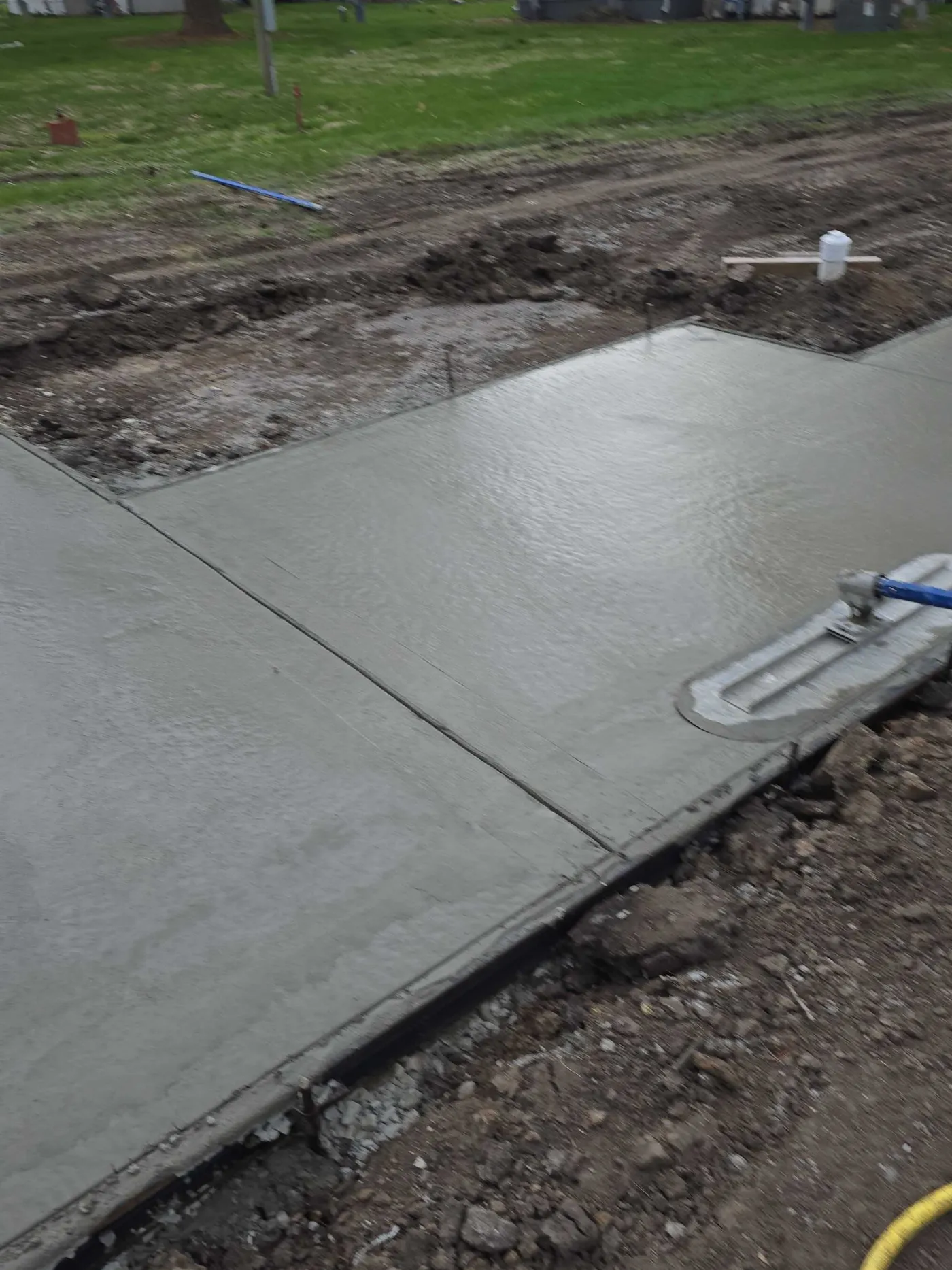
Concrete Replacement
Cracked, heaved, spalled concrete broken out, hauled off, and poured new on a rebuilt base. Driveways, patios, sidewalks and steps.
View Details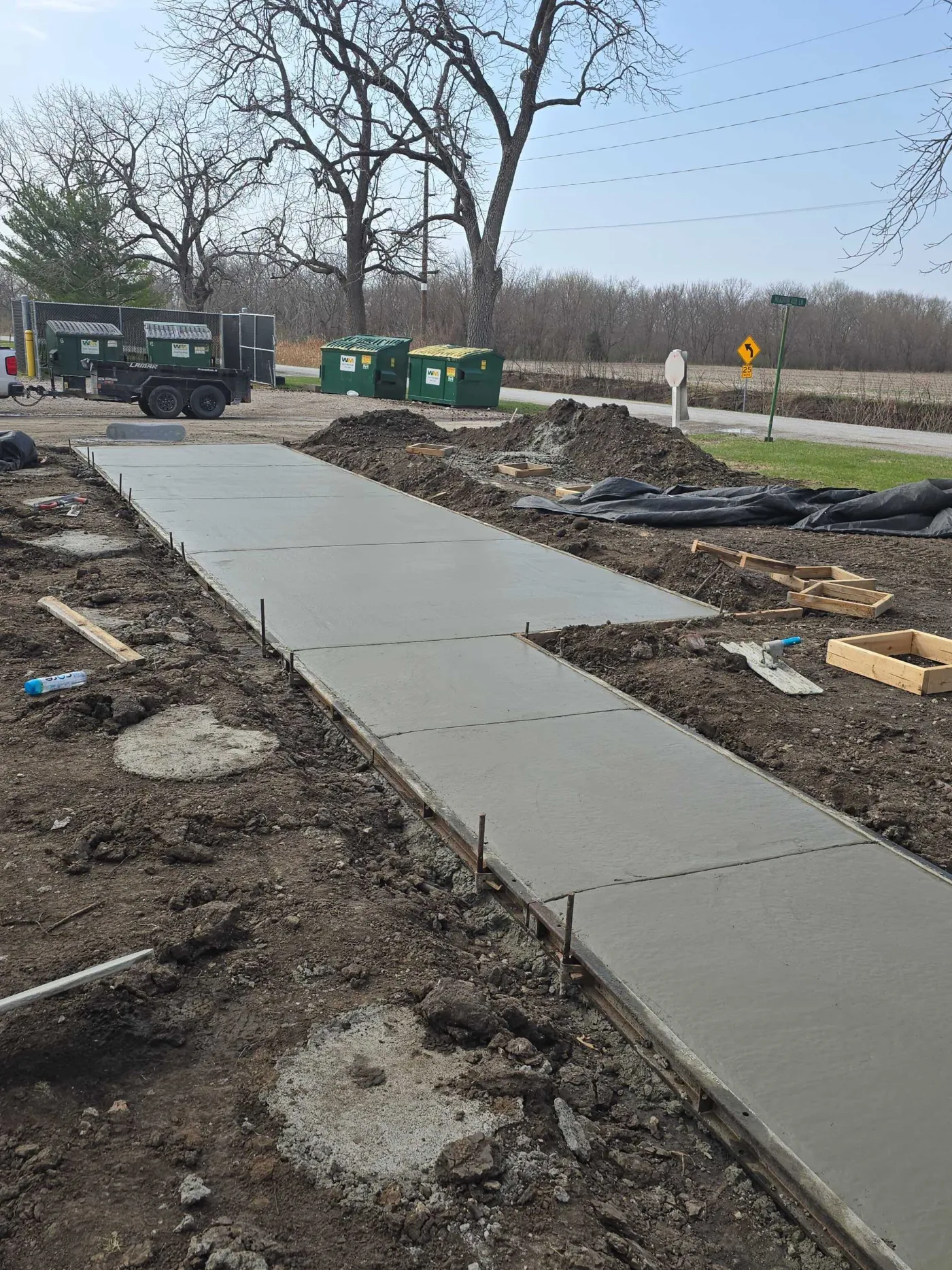
Commercial concrete in Billings, Laurel, Lockwood and across the Yellowstone Valley is the flatwork a business runs on all day. We pour and replace sidewalks and walkways around buildings, dumpster pads and enclosure slabs, drive-thru lanes and loading areas. Equipment pads, small commercial slabs and concrete sections set inside an asphalt lot are part of it too. Restaurants, retail buildings, offices, shops, churches and property managers hire this work, and the pavement side of the same lot is commercial asphalt paving.
Most of it happens with the doors open. We phase the work in sections and hold an entrance and a walking path to the door. The loud part gets scheduled around the hours that matter to your business. Saw cuts land on the joint lines, so new concrete meets old on a clean edge. We do not lift or level slabs. A settled pad gets cut out and poured back new, which is removal and replacement. Every property gets a written scope before anything comes out.
Tell us about your project — we’ll get right back to you.
A business lot carries weight a home driveway never sees. A loaded garbage truck backs onto the dumpster pad every week. Delivery trucks swing the same corner, and drive-thru traffic tracks one wheel path all day. Typical municipal and hauler standards elsewhere spell out what that takes. Pads start at four inches of concrete, with six inches on the drive leading to the container. They call for 3,000 psi concrete, bar or mesh reinforcement, and a compacted stone base. The approach in front has to sit level and carry a 20,000 pound truck. Billings publishes no pad thickness of its own, so we match the pour to the trucks using it.
Pads fail at the approach first. That front edge takes the truck wheels and the lift forks on every pickup. One standard elsewhere puts a concrete apron the width of the enclosure eight feet out front. It slopes an eighth of an inch per foot away from the pad. A compactor sits heavier than a dumpster and calls for a solid concrete base under it. Billings Logan airport averages about 81 freeze and thaw cycles a year. Deicer and plow blades work the surface through all of them. When one section has broken up and the rest of the slab is sound, that is section replacement.
A lot does not have to close all at once. We break the job into sections, hold the entrance, and pour in the order that keeps traffic moving. Dumpsters need somewhere to sit while their pad cures. The City asks commercial properties to provide suitable facilities for receptacle storage. The Solid Waste Division approves container type, size and placement, so the temporary spot gets settled before the pour. New sidewalks and steps around the building go in one run at a time.
Permits sort out by where the work sits. The City of Billings requires a permit for parking lots. Sidewalks or driveways that support no structure and sit entirely on private property do not. Work in the public right of way runs under a right of way permit. The City issues those permits to licensed and bonded contractors and inspects the work. Outside the city limits, the State of Montana governs. When a lot is rebuilt or added to, the zoning code sets the layout. It calls for a five foot walkway between building and lot. Parking areas over forty spaces need marked pedestrian pathways, and accessible stalls go in at the count the ADA requires. We form the walks, ramps and pads to that plan. A compliance question about your specific lot goes to the City or your design professional.
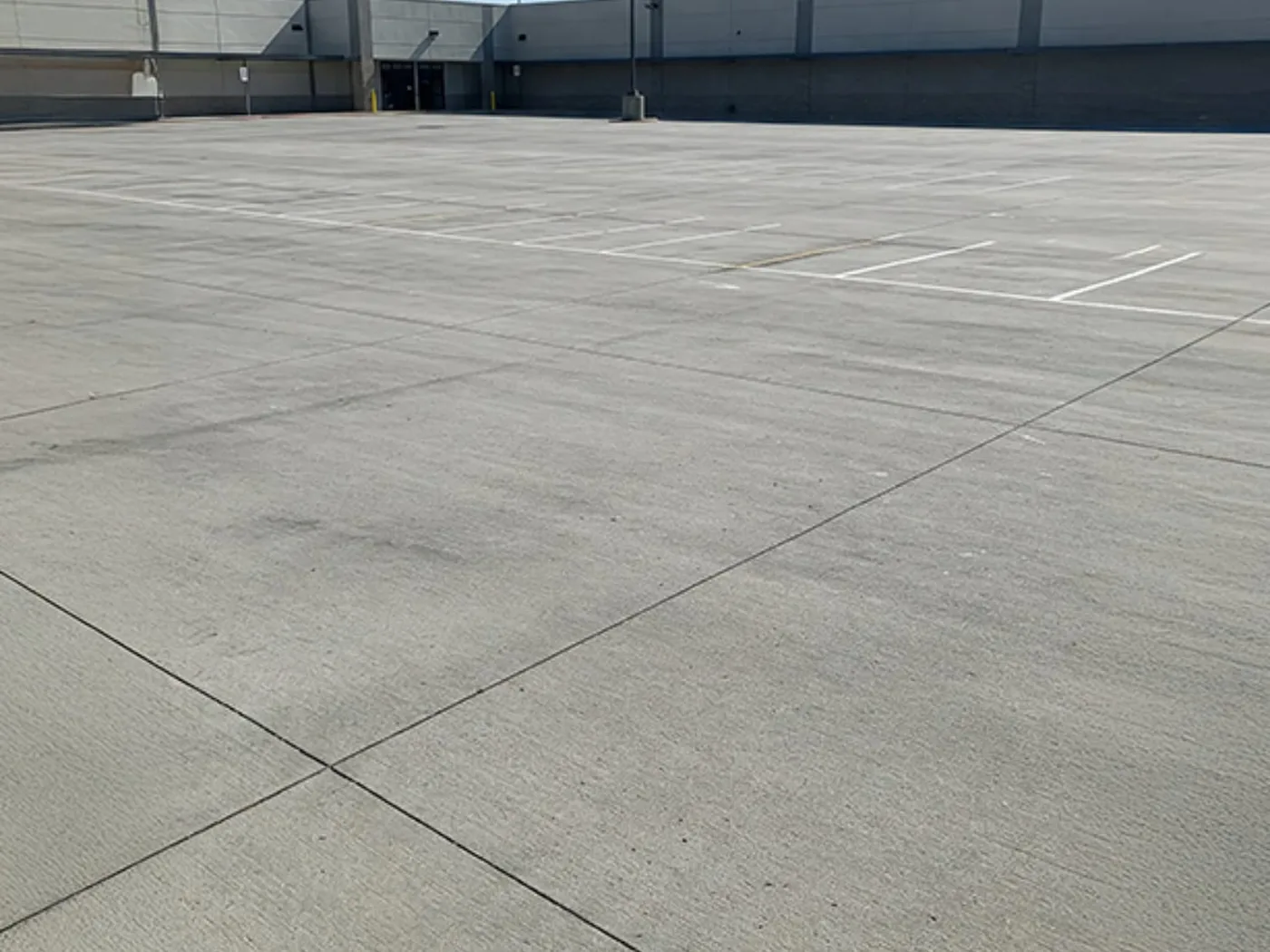
Concrete earns its place where loads sit still or turn hard. Dumpster pads and their approaches, drive-thru lanes, loading areas, entrance aprons and building walks are concrete work. Asphalt ruts under slow heavy wheels running the same track. That is why a drive-thru lane gets poured in concrete instead of paved. Open stalls and drive aisles cover most of a lot. There, parking lot paving in asphalt costs less per square foot and opens sooner.
Season decides the order of the work. The Montana DOT spec holds plant mix paving to a November 1 cessation date. Paving also stops when the surface sits under 35 degrees. Concrete has its own rule. Cold weather practice starts when the forecast calls for under 35 degrees during the cure, and nothing gets poured on frozen base or subgrade. Both trades are in-house, so pads, pavement and fresh stall lines land on one schedule. Shop floors and equipment pads for the building itself are slab and pad work. Our striping cost guide covers how those lines get priced.
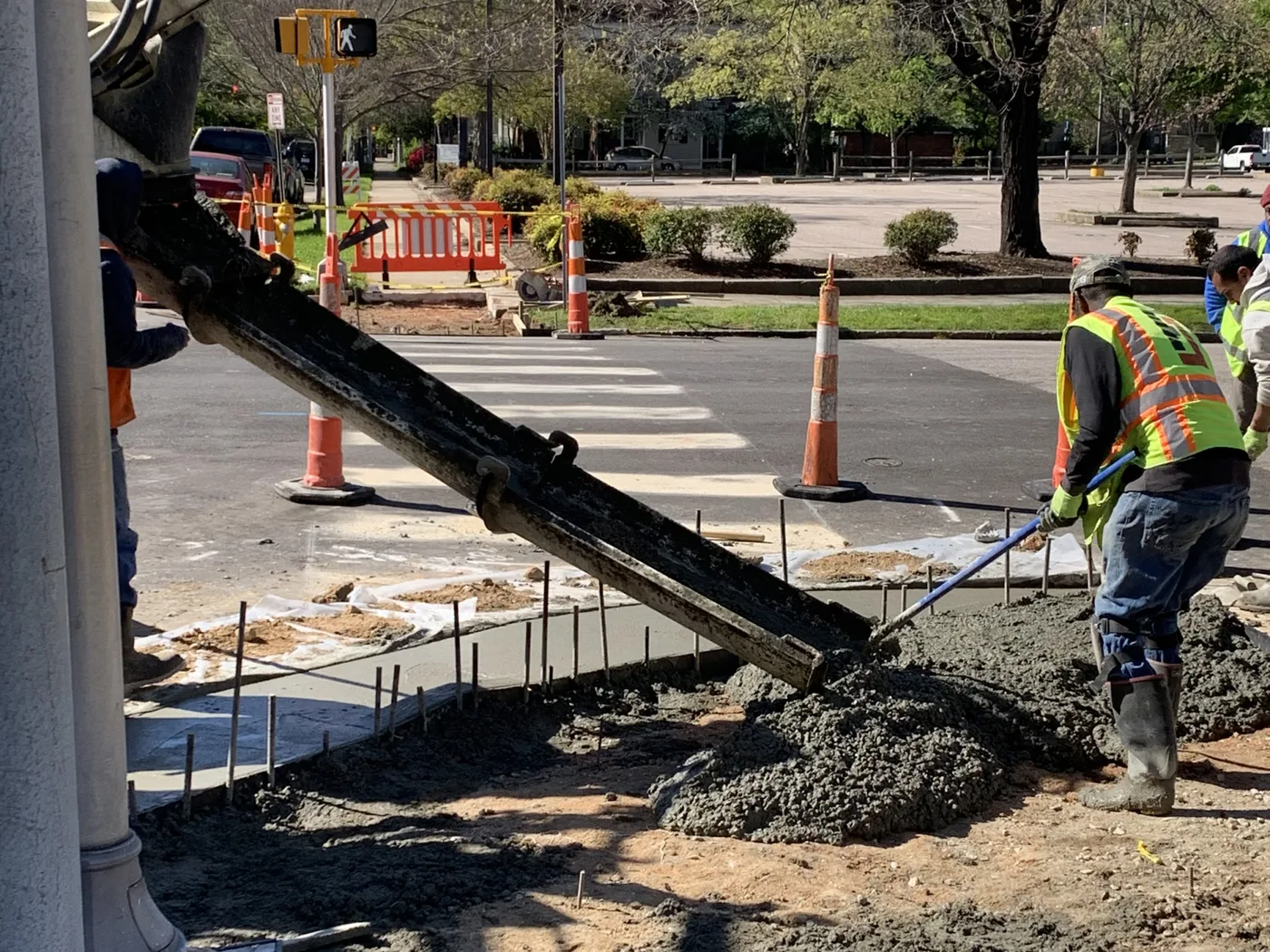
Free, no-obligation estimates across Billings & the Yellowstone Valley.
(406) 717-4103From the first look at the job to the final walk-through, here is exactly how it goes.
We come see the actual job — the slab, the driveway, the lot, and the ground under it. What failed, why it failed, and what the fix really is. No blind quotes over the phone.
You get a free written quote with a real number and a real timeline. It says what's included — tear-out, haul-off, prep, materials — and it holds unless the scope changes.
The crew shows up when we said and does the job the way we quoted it — tear-out, base, forms, pour, pave, seal or stripe. Anything unexpected, you hear about it immediately, not on the invoice.
We walk the finished work together before we call it done. Clean lines, clean site, old material hauled off, and clear guidance on cure times and care. Done means you say it's done.
Common questions about commercial concrete across Billings & the Yellowstone Valley. Don't see yours? Give us a call — we're happy to help.
Cracked, heaved, spalled concrete broken out, hauled off, and poured new on a rebuilt base. Driveways, patios, sidewalks and steps.
View Details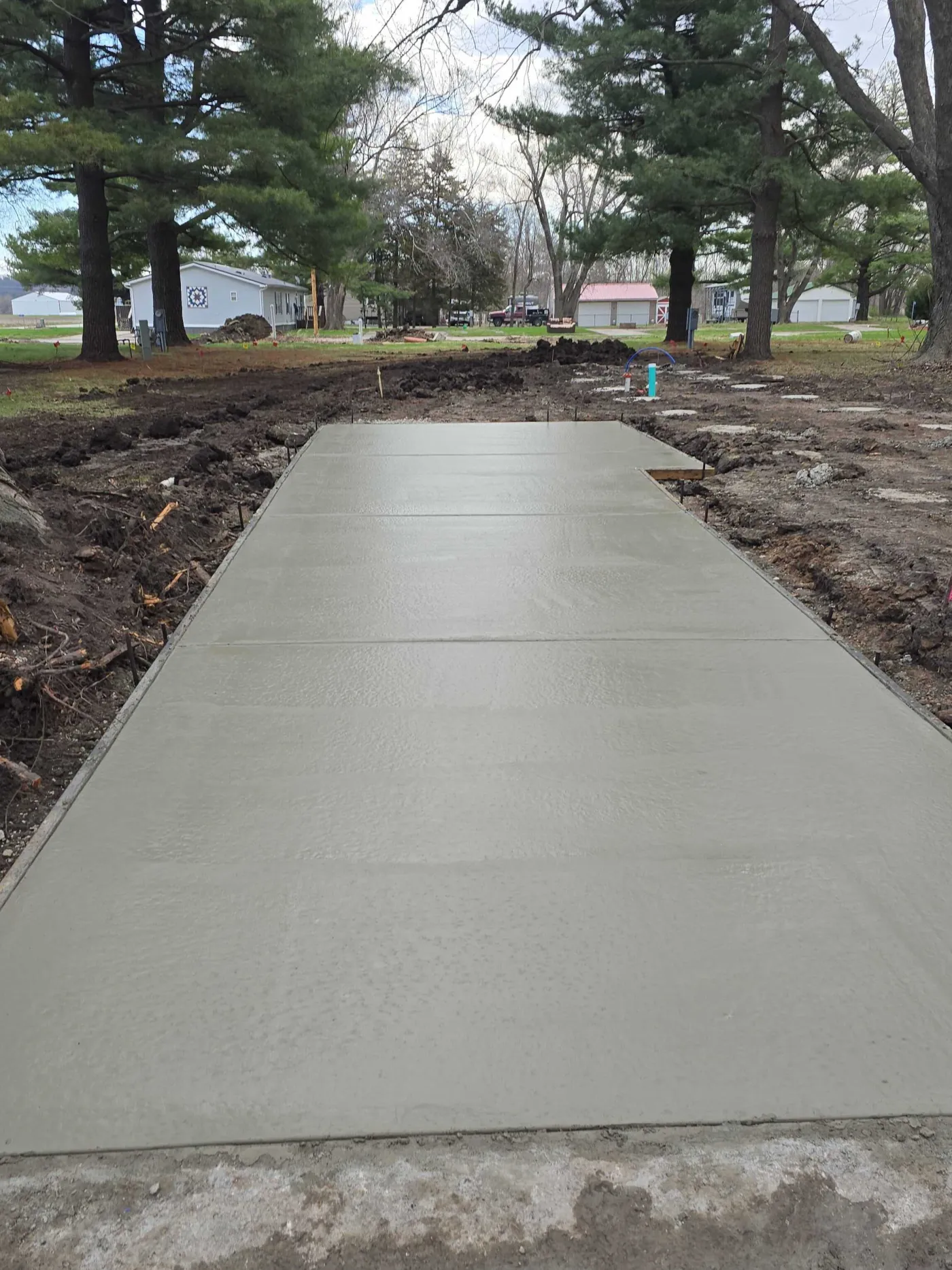
New concrete driveways and full replacements — compacted base, clean finish, control joints laid out for the slab. Built to be plowed.
View Details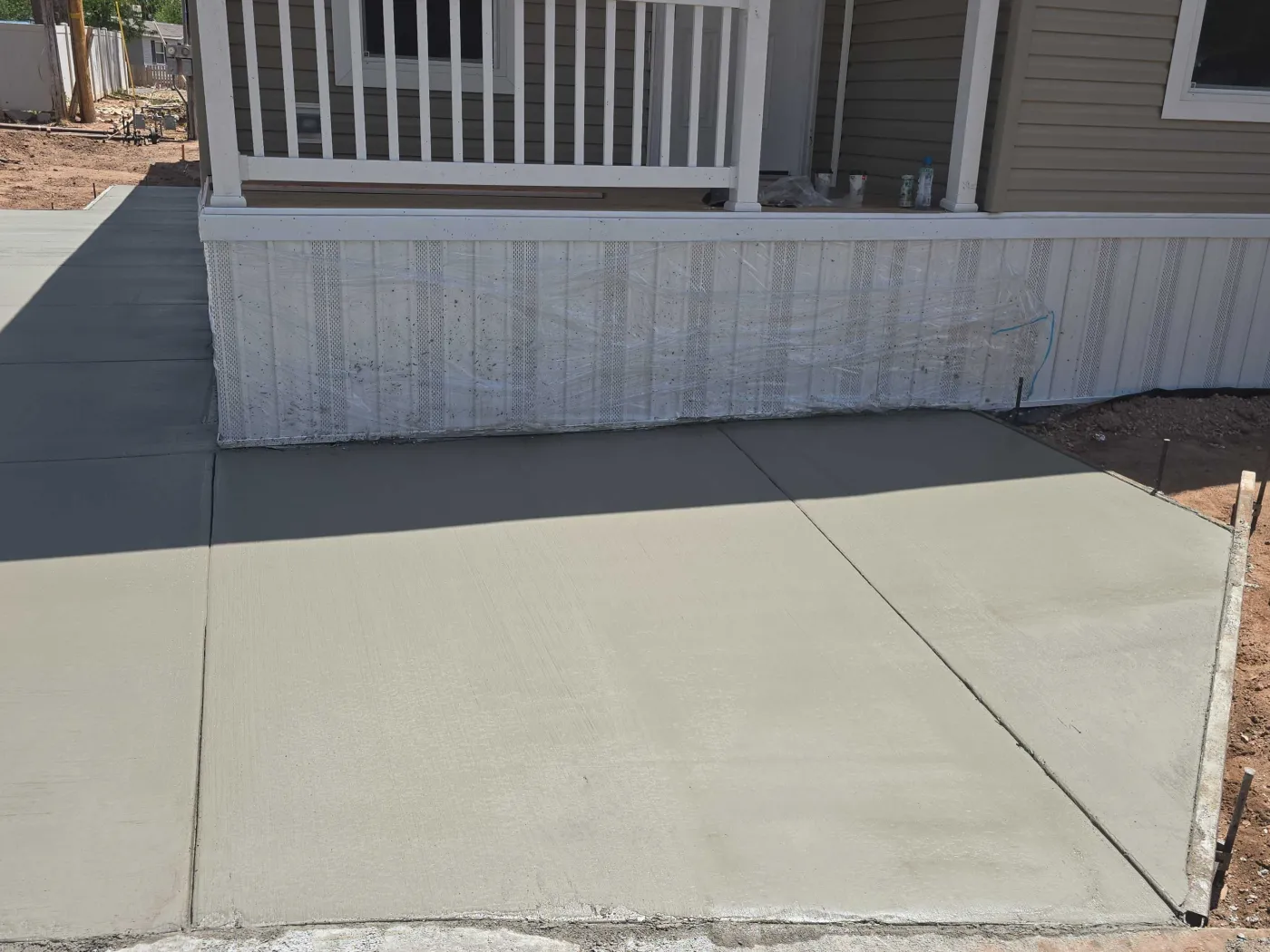
Patios, sidewalks, walkways and steps — formed, poured and hand-finished, sloped to drain, and built on ground that will hold them flat.
View Details
Asphalt driveways and parking lots paved, patched and repaired — base problems fixed underneath, hot mix compacted while it's hot.
View Details
Hot-applied rubberized crack seal for driveways and lots — water stays out, freeze-thaw stays beaten, small cracks never become potholes.
View Details
Faded gray asphalt sealed back to black — a barrier against sun, water and vehicle fluids that keeps the mat flexible and the base dry.
View DetailsWe do not patch over failed concrete or jack sunken slabs. Cracked, heaved or spalled flatwork gets torn out, hauled off, and poured new — done once, done right.
Most outfits do one or the other. We pour concrete and work asphalt — paving, crack sealing, seal coating, striping — so your whole property has one number to call.
We look at the actual job, price it in writing, and tell you what is worth doing and what is not. No phone guesses, no surprise change orders.
Based in Shepherd, minutes from Billings. We know what freeze-thaw winters and plow blades do to driveways here — and we build for it.
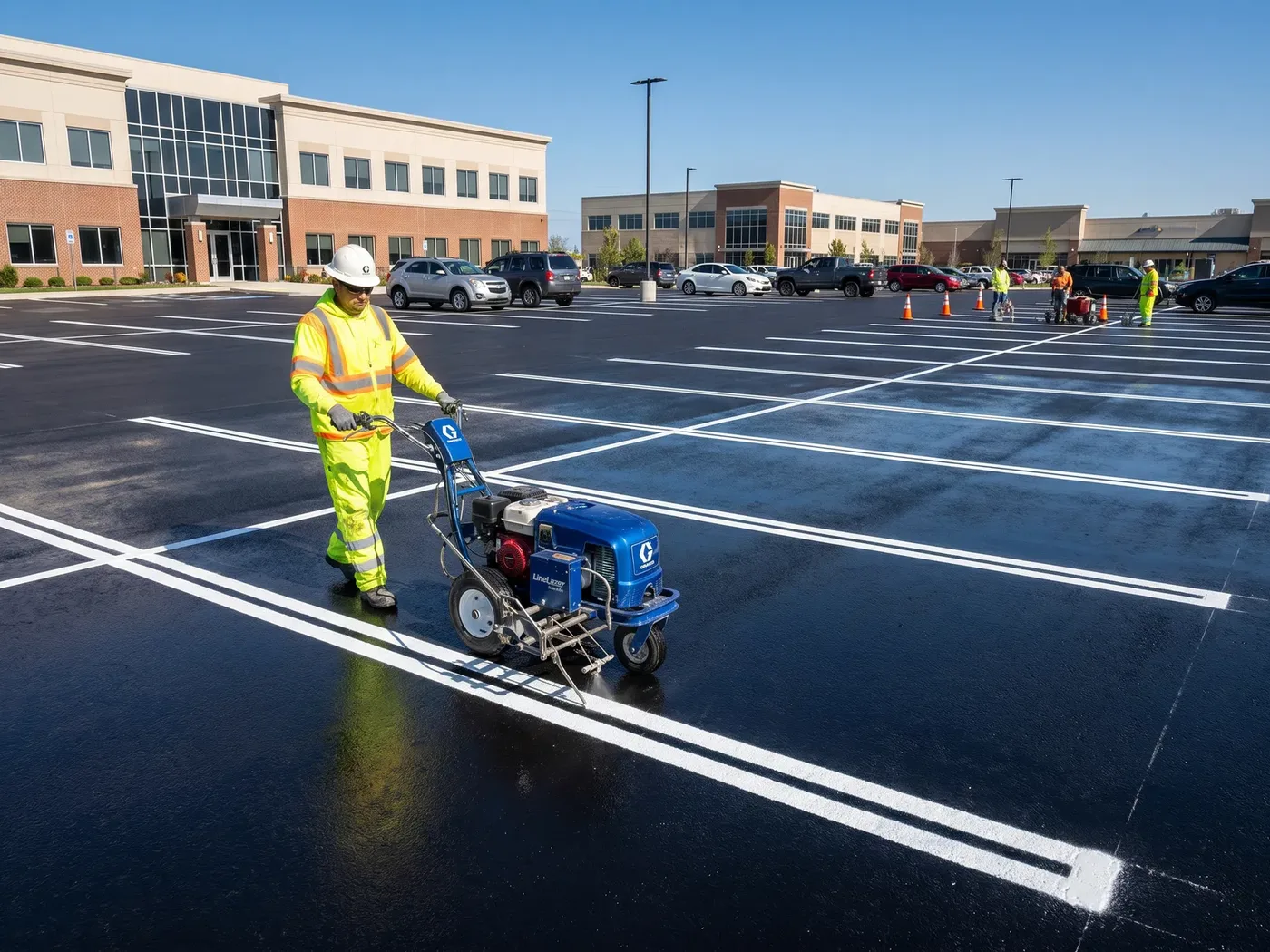
What parking lot striping costs around Billings in 2026: published per stall and per foot ranges, ADA stall counts, and when paint can go down.
Read MoreWhat a concrete slab costs around Billings in 2026: per square foot ranges, 4 inch vs 6 inch, rebar, base work and the Montana frost and permit rules for garage, shop and shed pads.
Read MoreConcrete or asphalt for a Montana driveway? A side by side look at cost, lifespan, maintenance and how each one handles 81 freeze-thaw cycles a year.
Read MoreCracked driveway, new patio, a parking lot that needs sealing and fresh stripes? Call or send the form and we will look at the job with you and hand you a free written quote — concrete or asphalt, residential or commercial.
Tell us about your project — we’ll get right back to you.